Types of sarees explained: cotton, silk, Chanderi, Ilkal, Bandhani and more
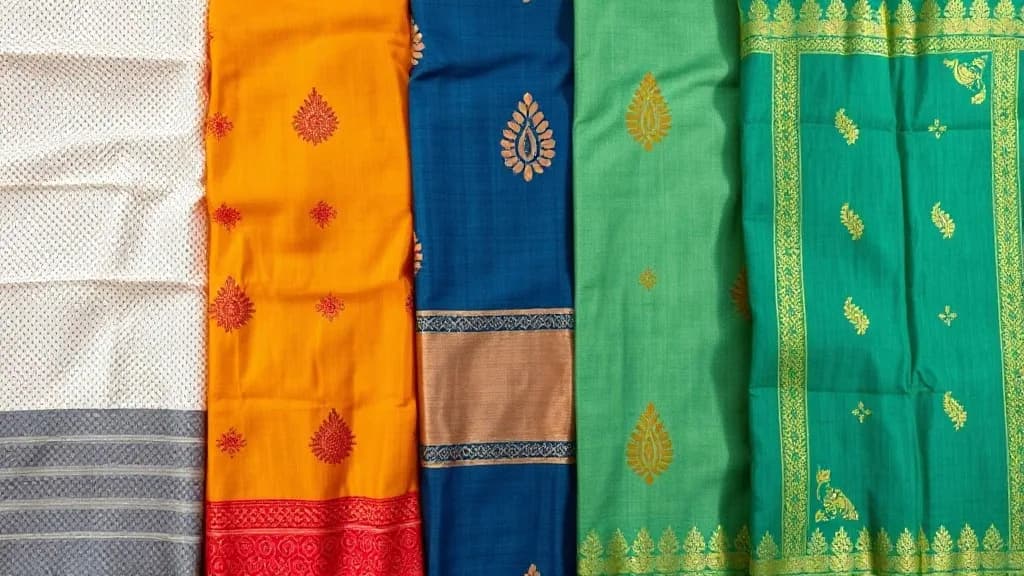
Walk up to a saree counter and the names come fast: Chanderi, Ilkal, Bandhani, Banarasi, georgette, mulmul. They are not brand names. Each describes either the fibre, the region or the technique behind the cloth. Here is what they actually mean, so you can buy with your eyes open.
Cotton and mulmul
Plain cotton is the everyday saree: it breathes, it forgives a long day, and it washes at home. Mulmul is a very fine, soft cotton, light enough for the worst of summer. If you want one saree you will reach for again and again, start in cotton.
Silk and art-silk
Silk is the dress-up fabric: it holds a drape, catches light and lasts decades if cared for. Art-silk, or faux silk, gives much of the same fall and sheen at a kinder price, which is why it earns its place on a working family’s shelf. Both want gentle handling; see our fabric care guide.
Chanderi
A Chanderi saree, woven in Madhya Pradesh, is prized for being light and slightly sheer with a soft glow. It sits beautifully for a daytime function without weighing you down.
Ilkal
From Karnataka, the Ilkal saree is a sturdy handloom cotton, often with a distinctive contrast border and a pallu in a different weave. It is built for real wear, with deep traditional reds and a character that softens with every wash.
Bandhani
Bandhani is not a fabric but a technique: thousands of tiny dots tied and dyed by hand, mostly in Gujarat and Rajasthan. On georgette or cotton, it gives that unmistakable speckled pattern. No two are exactly alike.
Banarasi
The Banarasi saree, from Varanasi, is the festive heavyweight, known for its zari work and rich motifs. True Banarasi silk is an heirloom; art-silk Banarasi gives the look for daily budgets.
Georgette
Georgette is a lightweight, crinkled fabric that drapes softly and dries fast, which makes it a quiet favourite for the monsoon and for travel.
Which to buy first
If you are building a saree shelf from nothing: one good cotton for daily wear, one Chanderi or art-silk for daytime functions, and one Banarasi for the festive calendar will carry you through a year. Browse the full saree shelf, and when you find a silk you love, read how to tell a real one from a fake.
Fabrics at a glance
| Fabric | Best for | Care |
|---|---|---|
| Cotton & mulmul | Daily wear, summer | Machine or hand wash |
| Silk & art-silk | Functions, festivals | Dry clean (art-silk: gentle) |
| Chanderi | Daytime functions | Gentle wash |
| Banarasi | Weddings, festivals | Dry clean |
| Bandhani | Colourful everyday | Hand wash |
| Georgette | Monsoon, travel | Hand wash, hangs dry |
Common questions
Which saree should I buy first?
One good cotton for daily wear, a Chanderi or art-silk for daytime functions, and a Banarasi for festivals.
What is the difference between silk and art-silk?
Art-silk gives much of silk’s fall and sheen at a kinder price, and is easier to care for.
Are Banarasi sarees only for weddings?
The heavy zari ones are festive; lighter art-silk Banarasi works for daytime too.